


 Updated
Forex trading is legal in many countries, but the rules are not the same everywhere. In some regions, retail traders may access forex through regulated brokers. In others, forex trading may be limited to exchange-listed currency products, locally authorised intermediaries, or specific approved platforms.
The key point is this: forex trading legality depends on where the trader is based, which broker is used, what product is being traded, and whether the platform is authorised to offer services in that jurisdiction.
This means a forex trading app or broker may be available in one country but restricted in another. Product access may also vary. For example, some traders may be able to trade forex contracts for difference (CFDs), while others may only have access to domestic currency futures, currency options, or other locally approved instruments.
This article is provided for general informational and educational purposes only. Forex and CFD regulations differ by jurisdiction, and users should confirm local requirements before opening an account or placing a trade.
Key Points
- Forex trading may be legal in many countries, but access depends on local regulations, broker authorisation, and product availability.
- Some jurisdictions allow retail forex or CFD trading through regulated brokers, while others restrict offshore platforms, leverage, currency pairs, or payment routes.
- Before using a forex trading app or broker, users should check whether the broker is authorised to serve their country and whether the products offered are available under local rules.
How Forex Trading Is Regulated?
Forex trading is usually regulated through a country’s financial authorities, securities regulators, central bank, or a combination of these bodies. Their role is to set rules around broker licensing, market conduct, client protection, leverage, risk disclosure, and permitted products.
In some countries, brokers must hold a local licence before offering forex or CFD products to retail clients. In others, overseas brokers may be allowed to serve clients only under specific conditions. Some markets also place restrictions on leverage, advertising, payment methods, or the types of currency products that can be offered.
Because the rules differ by country, traders should avoid assuming that a platform available online is automatically authorised where they live. A broker’s website, legal documents, entity name, and regulator information should be reviewed carefully before any account is opened.
What Kind Of Forex Trading May Be Allowed?
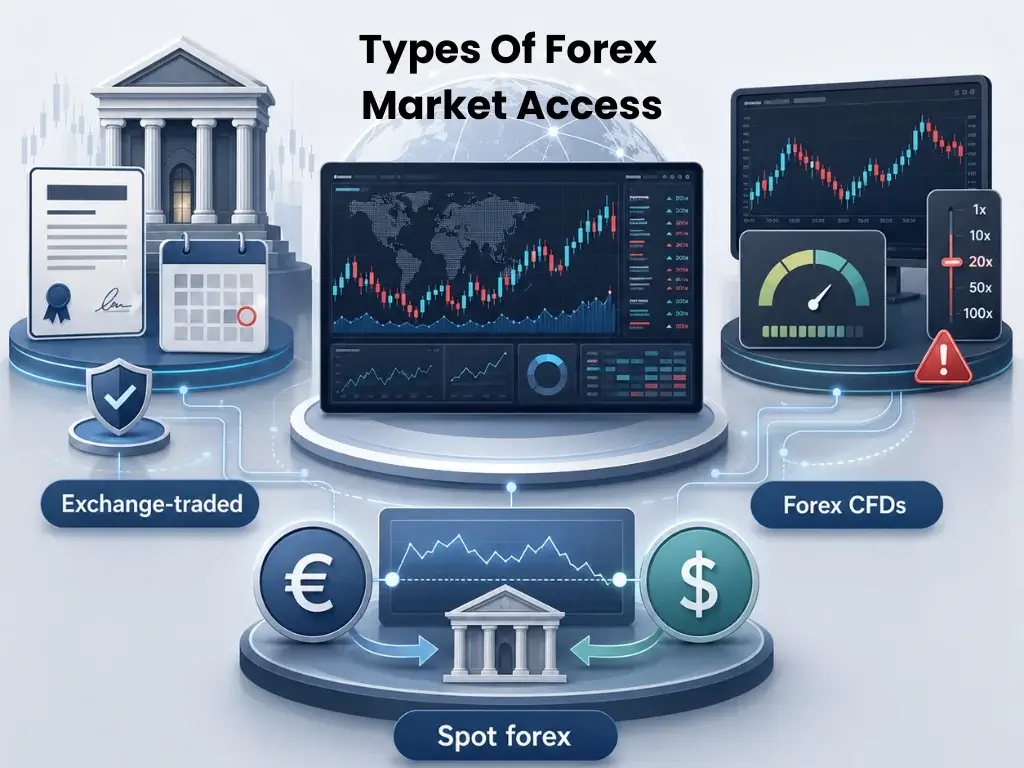
In some jurisdictions, such as India, Thailand, Vietnam, the Philippines, and other markets, forex rules may distinguish between trading through recognised domestic exchanges and trading other types of forex products.
Exchange-Traded Currency Products
Some countries allow forex exposure through exchange-listed products such as currency futures or options. These are usually traded through recognised exchanges and locally regulated brokers.
This structure may offer clearer oversight because the exchange, broker, and contract specifications are usually defined under domestic rules.
Forex CFDs
In some regions, traders can access forex through Contracts for Difference (CFDs). Forex CFDs allow traders to take a position on currency price movements without owning the underlying currencies.
CFDs are leveraged products, which means both potential gains and losses can be magnified. Because of this, regulators in many regions place specific rules around CFD trading, including risk warnings, leverage limits, and product disclosure requirements.
Spot Forex Access
Spot forex trading may be available in some markets, usually through authorised brokers or financial institutions. However, the rules around retail spot forex can vary widely. In certain jurisdictions, retail access to spot forex may be restricted, especially when offered through offshore platforms or platforms not authorised in that jurisdiction.
What May Fall Outside Local Forex Trading Rules?
Forex trading may fall outside local rules if the broker, product, or payment route is not authorised in the trader’s jurisdiction. This can include platforms that are not licensed to serve local residents, products that are restricted under domestic rules, or offshore trading arrangements that conflict with local foreign exchange controls.
The table below summarises the general distinction.
| Feature | Generally Regulated Route | Potentially Restricted Route |
| Broker Type | Locally authorised or properly regulated broker | Broker or platform not authorised in the relevant jurisdiction |
| Product Type | Products permitted under local rules | Products restricted or not approved locally |
| Platform Access | Offered through recognised or authorised channels | Offshore or unapproved platform access |
| Risk Disclosure | Clear product, cost, and risk information | Limited or unclear risk information |
| Legal Oversight | Subject to local or recognised regulatory supervision | May fall outside local investor protection rules |
How To Check Whether A Forex Broker Is Authorised
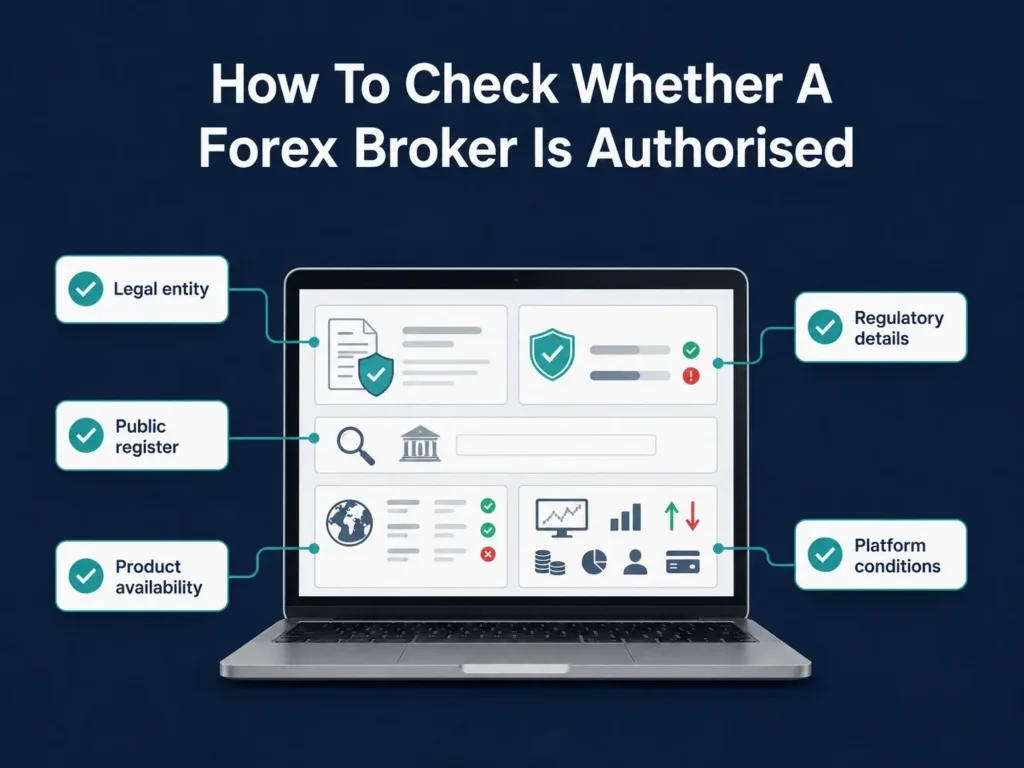
Before using a forex broker, users can review several key areas to better assess whether the broker is suitable for further consideration.
First, check the broker’s legal entity. Many brokers operate through multiple entities, and each entity may be regulated in a different jurisdiction. The entity available to one user may differ from the entity available to another user in a different country.
Next, review the broker’s regulatory information. This usually appears in the website footer, legal documents, client agreement, or account-opening pages. Users can then compare those details with the relevant regulator’s public register, where available.
It is also important to check product availability. A broker may offer forex CFDs in one region, but a different set of products in another. Platform features, leverage, spreads, account types, and payment options may also vary based on country and entity.
Forex Trading Risks To Consider
Alongside the legal framework, traders should be aware of several practical risks associated with forex trading.
- Currency risk is present in all forex positions. Exchange rates can move sharply in response to interest rate expectations, inflation data, central bank decisions, economic releases, and geopolitical developments. These price movements can lead to losses, including losses that exceed the initial margin deposited when leverage is used.
- Leverage risk is also an important factor in forex and CFD trading. While leverage can increase market exposure, it can also magnify losses. Leverage limits may differ by country, broker entity, product type, and regulatory framework.
- Regulatory risk refers to the possibility that forex trading rules may change over time. This can affect product availability, leverage limits, payment methods, broker access, or account conditions. Traders should refer to the relevant financial regulator in their country for the latest requirements.
- Platform and counterparty risk may arise when using brokers or platforms that are not properly authorised in the trader’s jurisdiction. If a dispute occurs, users may have fewer complaint channels or legal protections compared with trading through a regulated broker subject to recognised oversight.
For a closer look at managing exposure, leverage, and downside risk, read our guide on mastering forex risk management
Where The Legal Line Sits For Forex Trading
The legal line for forex trading is usually shaped by three questions:
- Is the broker authorised to serve users in that country?
- Is the product allowed under local rules?
- Is the trading route, platform, and payment method permitted?
A trader based in one country may have access to forex CFDs through a regulated broker, while a trader in another country may be limited to exchange-traded currency derivatives or may face restrictions on offshore platforms.
That is why forex trading should be reviewed by jurisdiction rather than treated as universally legal or illegal. The same platform can sit inside the rules in one country and outside them in another.
FAQ
Is Forex Trading Legal?
Forex trading is legal in many countries, but the rules vary by jurisdiction. Some countries allow retail forex or CFD trading through regulated brokers, while others restrict certain products, platforms, leverage levels, or offshore access.
Users should check the local rules that apply in their home country before using a forex trading platform.
Can I Use An International Forex Broker?
This depends on the user’s country of residence and the broker’s authorisation. Some international brokers may be permitted to serve clients in certain regions, while others may not be authorised to offer services in specific jurisdictions.
Users should review the broker’s terms, regulatory information, and local rules before opening an account.
Why Do Forex Trading Rules Differ By Country?
Forex trading rules differ because each country has its own financial regulations, investor protection standards, foreign exchange controls, and product restrictions.
Some regulators focus heavily on leverage limits and risk warnings. Others may restrict offshore payments, limit currency products, or require traders to use locally registered brokers.
What Should I Check Before Using A Forex Trading App?
Before using a forex trading app, users should check the broker’s regulatory status, legal entity, product availability, fees, spreads, funding methods, and risk disclosures. It is also useful to confirm whether the broker is authorised to offer services in the user’s country and whether the products shown in the app are available under local rules.
Are Forex Trading Apps Safe?
Forex trading apps can vary widely in terms of security, transparency, platform stability, and regulatory oversight. Apps offered by authorised brokers typically provide clearer product information, account terms, and risk disclosures. However, no trading app removes market risk. Forex and CFD trading can result in losses, especially when leverage is used.
RISK WARNING: CFDs are complex financial instruments and carry a high risk of losing money rapidly due to leverage. You should ensure you fully understand the risks involved and carefully consider whether you can afford to take the high risk of losing your money before trading.
Disclaimer: The information is provided for educational purposes only and doesn’t take into account your personal objectives, financial circumstances, or needs. It does not constitute investment advice. We encourage you to seek independent advice if necessary. The information has not been prepared in accordance with legal requirements designed to promote the independence of investment research. No representation or warranty is given as to the accuracy or completeness of any information contained within. This material may contain historical or past performance figures and should not be relied on. Furthermore estimates, forward-looking statements, and forecasts cannot be guaranteed. The information on this site and the products and services offered are not intended for distribution to any person in any country or jurisdiction where such distribution or use would be contrary to local law or regulation.