Language
SEARCH
-
AllTradingPlatformsAcademyAnalysisPromotionsAbout
-
Search query too short. Please enter a full word or phrase.
-
Keywords
- Forex Trading
- Vantage Rewards
- Spreads
Popular Search
- Trading Accounts
- MT4
- MT5
- Copy Trading
- Promotions
What are Bonds?
Bonds are debt instruments issued by governments, corporations, or other entities to raise capital.
When you invest in a bond, you’re essentially lending money to the issuer in exchange for regular interest payments, known as coupon payments, and the return of your principal at bond maturity.
While bonds are generally seen as lower-risk investments, their prices can fluctuate in the secondary market—even before maturity—due to factors such as:
- Interest rates
- Credit ratings
- Market demand
These price movements create both opportunities and risks for traders.
At Vantage, you can access bond trading through Contracts for Difference (CFDs). These allow you to speculate on bond price movements without owning the underlying asset, offering flexible, leveraged, and cost-effective exposure to global fixed-income markets.
How To Trade Bonds
With Vantage, there are two main ways to take a position on bonds:
- Speculating on bond price movements using leveraged derivatives like CFDs
- Investing in bond exchange-traded funds (ETFs) through a share dealing account
When trading bond CFDs, you won’t own the underlying bond. Instead, you’re speculating on whether the bond’s price—often tied to the bond futures market—will rise or fall. This allows you to take advantage of price fluctuations in the secondary bond market.
Alternatively, if you prefer a longer-term, more traditional investment approach, you can invest in bond ETFs. These funds track a basket of government or corporate bonds and may pay out dividends, offering a way to earn potential passive income while gaining diversified exposure to the bond market.
Note: All forms of trading and investing carry risk. CFD trading involves leverage, which can amplify both gains and losses. Always consider your risk tolerance and explore our educational resources on risk management before opening a position.
Why Trade Bonds
Bond trading offers unique advantages for traders looking to diversify their strategies and access global fixed-income markets. Whether you’re managing risk or seeking opportunities in volatile conditions, bonds can play a strategic role in your trading plan.
Here’s why many traders choose to trade bonds:
- Take Advantage of Price Movements
Bond prices fluctuate in the secondary market due to broader economic events such as changes in interest rates, inflation expectations, and central bank policies. These price movements create opportunities to profit, whether bond prices rise or fall. - Diversify Your Portfolio
Bonds often move differently than equities, making them a valuable tool for managing risk. Incorporating bonds into your strategy can help reduce volatility and improve overall portfolio stability during uncertain market conditions. - Trade with Flexibility
With CFDs on bonds, you can enjoy several benefits:- Trade without owning the underlying bond
- Go long or short based on market outlook
- Access global bond markets with lower capital outlay
- Respond quickly to macroeconomic news and rate shifts
Bond CFD trading appeals to those who want more control over their exposure to interest rate cycles, geopolitical risk, and credit sentiment—without the constraints of traditional bond investing.
Top Bonds For Trading Via CFDS
Low Commissions & Competitive Spreads
SEE ALL PRODUCTS
Why Trade Bonds With Vantage
-
Accessibility to
see more
Popular BondsTrade highly-rated bonds from both EU and US, such as Treasury bonds and government bonds, and speculate on their prices using CFDs.
-
Start Small
see more
from 1 LotStart trading from as little as 1 lot to kickstart your bonds CFD trading journey.
-
Trade
see more
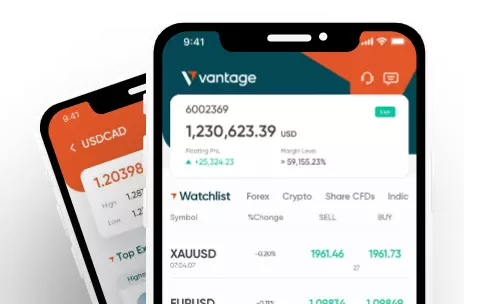
On The GoBuy and sell bonds anytime. React swiftly to news on our trading platform and mobile app.
-
Low & Transparent
see more
CostsExplore the potential of taking both long and short positions across a variety of CFD products, starting from just $0 per trade. Learn about our competitive commission fees by visiting our "All Instruments" page.
-
Free Educational
see more
MaterialsEquip yourself with bonds trading knowledge through free educational materials on our academy.
-
Trade Bear & Bull
see more
MarketsFlexibility to trade in both rising and falling bond markets.
-
Risk Management
see more
ToolsVantage offers negative balance protection, price alerts and stop loss tools to help you manage your downside risk.
-
MT4 & MT5
see more
AccountGet access to bond markets with powerful MetaTrader 4 and MetaTrader 5 trading platforms.
How To Start Bond Trading CFDS With Vantage: Step-By-Step Guide
-
1
Open a Live Account
Sign up with Vantage and verify your account.
-
2
Deposit Funds
Securely add funds to your trading account using multiple payment options.
-
3
Analyse the Bond Market
Gain insights with Vantage’s advanced tools and charts to identify potential bond CFDs to trade.
-
4
Open & Monitor Your First Trade
Place your first order by speculating on the price movements of bond CFDs—buy (long) or sell (short).
-
5
Close Your Position to Complete the Trade
Exit your trade to realise potential gains or manage risk.
Explore More About Bonds Trading
-
What Are Bonds?
Discover how bonds work, who issues them, and why they are often considered a core instrument in traditional and modern finance.
-
How to Trade Bonds
Understand the steps involved in trading bond CFDs, including platform tools, market factors, and basic trading mechanics.
-
Why Trade Bonds
Understand the appeal of bonds as a trading instrument. Explore their risk-return profile and their potential role in a diversified trading portfolio.
-
Bond Trading Strategies
Learn popular bond trading strategies and about factors that traders consider when developing strategies, along with key risks.

Award-Winning Broker
-
Best CFD
BrokerGlobal Brands Magazine
-
Best Multi-
Asset BrokerGlobal Business and Finance Magazine
-
Best CFD
Trading PlatformInternational Business Magazine

Trade Bond CFDS On Different Types Of Trading Platforms
MetaTrader 4
- 30 Built-in technical indicators
- 31 Analytical Charting Tools
- 9 Time-Frames
- 4 Types of trading orders
MetaTrader 5
- 38 Built-in technical indicators
- 44 Analytical Charting Tools
- 21 Time-Frames
- 6 Types of trading orders
TradingView
- 15+ chart types
- 100+ in-built indicators
- 50+ Drawing tools
- 12 alert conditions
Vantage Mobile App
- 55 Deposit Methods Globally
- 220+ Daily Product Analysis
- 16 TradingView Indicators
- 80,000+ Copy Traders
Choose a Trading Account Based on Your Experience Level
-
1
Beginner Traders
For beginner traders looking for direct market access with no commissions.
- Tight spreads from 1.1 pip.
- No extra commissions on trading volume.
-
2
Experience Traders
Offering seasoned traders razor-sharp spreads, low commissions, and deep liquidity.
- Tight spreads from 0.0 pip.
- Commissions from USD$3.00 per standard lot, per sid.
-
3
Professional Traders
For professional traders and money managers who trade large volumes.
- Tight spreads from 0.0 pip.
- Commissions from USD$1.50 per standard lot, per side.

-
1
Register
Quick and easy account opening process.
-
2
Fund
Fund your trading account with an extensive choice of deposit methods.
-
3
Trade
Trade with spreads starting as low as 0.0 and gain access to over 1,000+ CFD Instruments.
Frequently Asked Questions
-
1
What are the risks of bond trading?
Bond trading involves risks such as interest rate, inflation risk, market volatility and credit risks. To attempt minimising these risks, it's crucial to conduct thorough research, have a well-defined trading strategy, and practise sound risk management.
-
2
What are the potential advantages of bond trading?
Here are a few potential advantages of bond trading:
Potential opportunities: Bond trading provides traders with potential opportunities due to the fixed interest rate of regular coupon payments that come with bonds.
Greater liquidity: Bond markets can offer higher liquidity compared to certain other trading options, allowing traders to easily buy or sell bonds and adapt to market conditions.
Bond trading also comes with some risks. Traders should prioritise conducting thorough research and understanding the risks associated with bond trading before making any trading decisions.
-
3
How are bonds different from stocks?
Bonds and stocks are two distinct financial products that are traded in the market. Bonds serve as trading instruments that represent a loan provided by an investor or trader to a borrower, typically a corporation or government body. Stocks on the other hand, represent partial ownership of a company. If the company experiences good performance, the value of your stocks could have the potential to increase based on market supply and demand.
While there are some similarities between the two, given that they are both financial instruments used to raise capital, they operate in fundamentally different ways and have their own market risks. You can tap on our library of free educational materials to better understand the difference between bonds and stocks.
-
4
What is the difference between government and corporate bonds?
Government bonds and corporate bonds generally pay fixed interest rate to investors. They are issued by governments and corporations to generate funds. In exchange for the money they receive, bondholders receive regular interest payments and get back the initial amount invested when the bond reaches its maturity date.
However, they also do differ in several ways:
Issuer: As their names suggest, government bonds are issued by governments, either at the federal or local level; while corporate bonds are issued by corporations.
Credit Risk: Government bonds are backed by the government's full faith and credit. On the other hand, corporate bonds come with a higher risk of default since companies could potentially go bankrupt and default on these loans.
Interest Rate: Due to the higher risk, corporate bonds often offer higher interest rates than government bonds to compensate investors for the increased risk.
-
5
How much money do I need to start bond trading?
When using Vantage, you have the option to begin trading with a minimum deposit of USD$50. However, the specific amount required to trade bonds will vary based on factors, such as the type of bonds, leverage used, and your personal risk tolerance.
-
6
What is bond CFD?
A bond CFD is a type of derivative that allows you to speculate on the price movements of government or corporate bonds, without owning the actual bond.
When you trade a bond CFD, you’re entering into an agreement to exchange the difference in the bond’s price between the time you open and close the position. This means you can potentially profit from both rising and falling bond prices.
With bond CFDs, you can:
Trade on margin, which lets you gain larger market exposure with a smaller upfront investment.
Go long or short, depending on whether you expect bond prices to rise or fall.
Access global bond markets without having to buy the underlying asset.
Bond CFDs are ideal for traders seeking flexibility and short-term opportunities in the fixed-income market. However, like all leveraged products, they come with increased risk, so it’s important to manage your positions carefully.
-
7
How do bonds affect forex?
Bonds play a significant role in the forex market because they influence interest rate expectations and global capital flows, two key drivers of currency values.
When a country’s bond yields rise, it often signals the potential for higher interest rates. This tend to attract foreign investors seeking better returns, boosting demand for that country’s currency and driving up its value.
Bond markets also reflect investor sentiment. During periods of uncertainty, investors may shift their capital into safer assets like US Treasuries. This “flight to safety” can increase demand for the associated currency, affecting forex prices.
In short, bond yields serve as a barometer for economic outlook and monetary policy, making them essential for forex traders to watch.
Promotions & Resources
-
Vantage Rewards
Earn V-Points with every trade you make, and redeem exclusive vouchers. Join Vantage Rewards Today!
-
Deposit Bonus
Boost your trades – Double your deposit with our 50% bonus offered for new deposits!
-
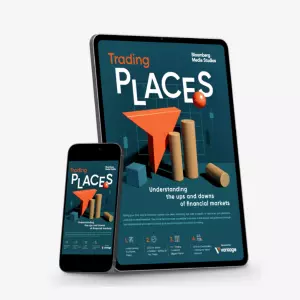
Trading Places:Understanding The Ups And Downs Of Financial Markets
This comprehensive starter guide, written in collaboration with Bloomberg, is designed to help you in kickstarting your trading and investment journey.